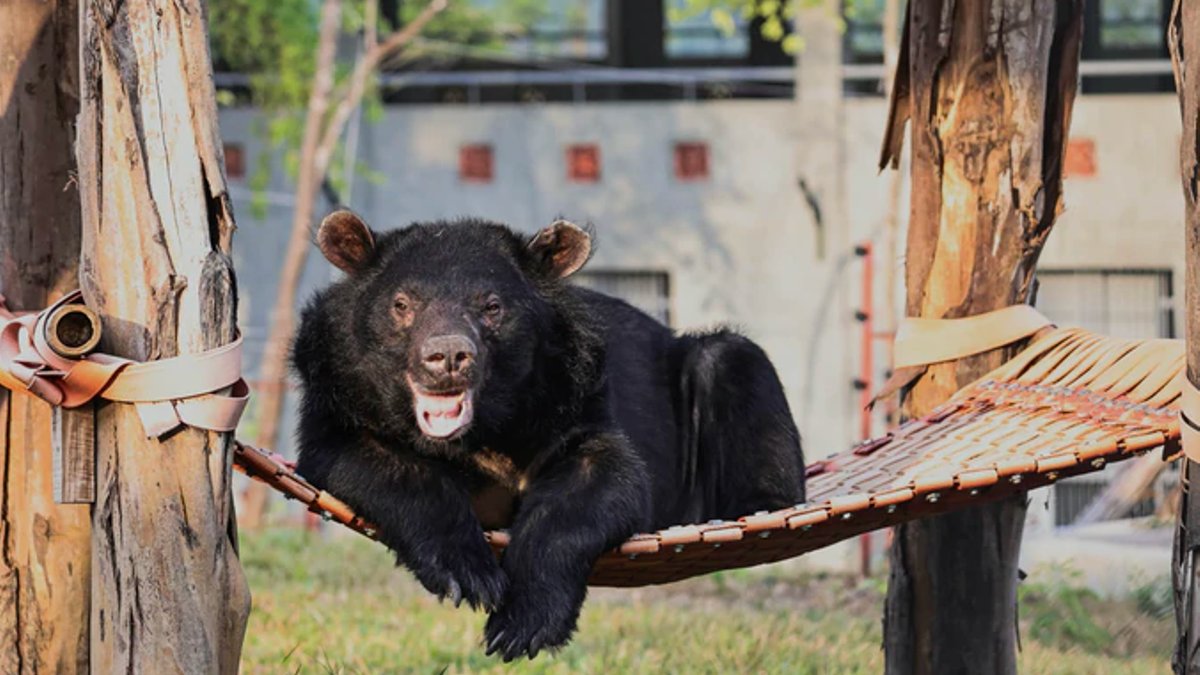
Rescued bears begin new lives after years of captivity in Vietnam, moving from cramped cages to sprawling semi-natural habitats designed to restore their natural instincts. The Vietnam Bear Rescue Center in Bach Ma National Park covers 12 hectares and supports Asiatic black bears and sun bears rescued from farms in Thai Nguyen, Hanoi, and Nghe An. Once confined to suffocating metal cages, the animals now inhabit individual indoor spaces of about 10 square meters, receiving proper care, hygiene, and nutrition.
Bears Learn Natural Habits
Every morning, staff begin caring for and monitoring the bears. When they first arrive, the animals are often emaciated and in poor condition. With time, proper food and attentive care, many regain their health and develop glossy black coats. Whether a bear is allowed into the semi-wild enclosure each day depends on factors including the weather and its health. The semi-wild habitat is surrounded by large mesh-covered structures. Inside are swings, pools of water, and climbing structures designed to encourage the bears to play and explore. Tree trunks are secured at their bases to prevent the animals from climbing or damaging them.
In the semi-natural enclosure, the bears take part in activities designed to restore their natural instincts and improve their physical condition. Rather than placing food in a single feeding trough, staff scatter it throughout the enclosure, putting treats on raised poles or hiding them in hollows and bamboo stems. The bears must move around and use their senses to find their meals. This helps bears recover their natural foraging instincts. Their environment and food are also varied as much as possible to stimulate them and partly recreate the vast and diverse conditions of a natural habitat.
Read Also: Ho Chi Minh City Plans Bond Issues
After the bears return to their rooms for a safe rest, caregivers clean the enclosures and prepare their food. The center primarily cares for Asiatic black bears and sun bears, both of which are omnivores. Plants make up between 70 percent and 90 percent of a bear’s natural diet. Their food includes forest fruits, seeds, bamboo shoots, leaves, young shoots, roots, and tubers. Their diets change regularly with the seasons and are supplemented with other foods, including dry feed providing protein, calcium, and minerals. Menus are rotated so that it takes roughly two weeks before a particular meal is repeated.
Health Care and Monitoring
Health monitoring is another essential part of their care. Every bear receives a routine health examination at least once every two years. Emergency examinations are conducted whenever caregivers notice signs of illness or other abnormal behavior. Bears that have spent many years in captivity commonly suffer from dental problems, musculoskeletal disorders, high blood pressure, and liver or gallbladder diseases. Veterinarians are able to treat most of these conditions, while particularly complex cases may require assistance from leading specialists in Vietnam or abroad. A bear hospital is equipped with modern facilities, including X-ray and ultrasound machines and blood-testing equipment, to provide thorough health examinations and treatment for the bears.
According to Vietnam’s Department of Forestry and Forest Protection, the country recorded 4,239 captive bears in 2005. After more than two decades of coordinated management, rescue, and public-awareness efforts, the number had fallen to 206 animals as of July this year, a reduction of nearly 95 percent from its peak. Over the past two years alone, the captive population has fallen from 384 to 206, demonstrating the impact of cooperation among government agencies, forest rangers, and conservation organizations. Nevertheless, 129 bears remain in the hands of 46 households and private facilities.
Ending Bear Bile Trade
These animals are considered a priority for continued efforts to persuade their owners to voluntarily transfer them to rescue centers. The localities with the largest remaining populations include Hanoi, Nghe An, Hai Phong, and Dong Nai, along with several northern provinces. The biggest challenge now is no longer rescue capacity, but shortening the time between reaching an agreement with an owner and safely bringing the bear to a rescue center.
Read Also: Toyota Seeks Hybrid Access to Ho Chi Minh Zones
For years, rumors about the supposed medicinal value of bear bile, bear paws, claws and gallbladder products as well as the practice of keeping bears as pets, have helped drive the species toward decline. Although people involved in the illegal trade in bear bile continue to face penalties, demand among consumers has proved difficult to eliminate.
In mid-March, a court in Ho Chi Minh City sentenced D.M.H., born in 1997, to 18 months in prison for illegally possessing and trading 39 bear claws and teeth. Education for Nature Vietnam (ENV) has warned that efforts to end bear bile farming cannot be completed as long as a market for bear bile remains. Of particular concern is the growing availability of jewelry made from bear teeth and claws on online marketplaces.
The department has set 2026 as the target year for completely ending the bear bile farming industry. Animals Asia began rescuing bears in Vietnam in 2007. The organization has rescued 300 bears, including Asiatic black bears and sun bears. Of these, 183 are currently living in lush semi-natural environments at two bear rescue centers, located in the buffer zone of Tam Dao National Park in Phu Tho Province, northern Vietnam, and Bach Ma National Park in Hue City, central Vietnam.