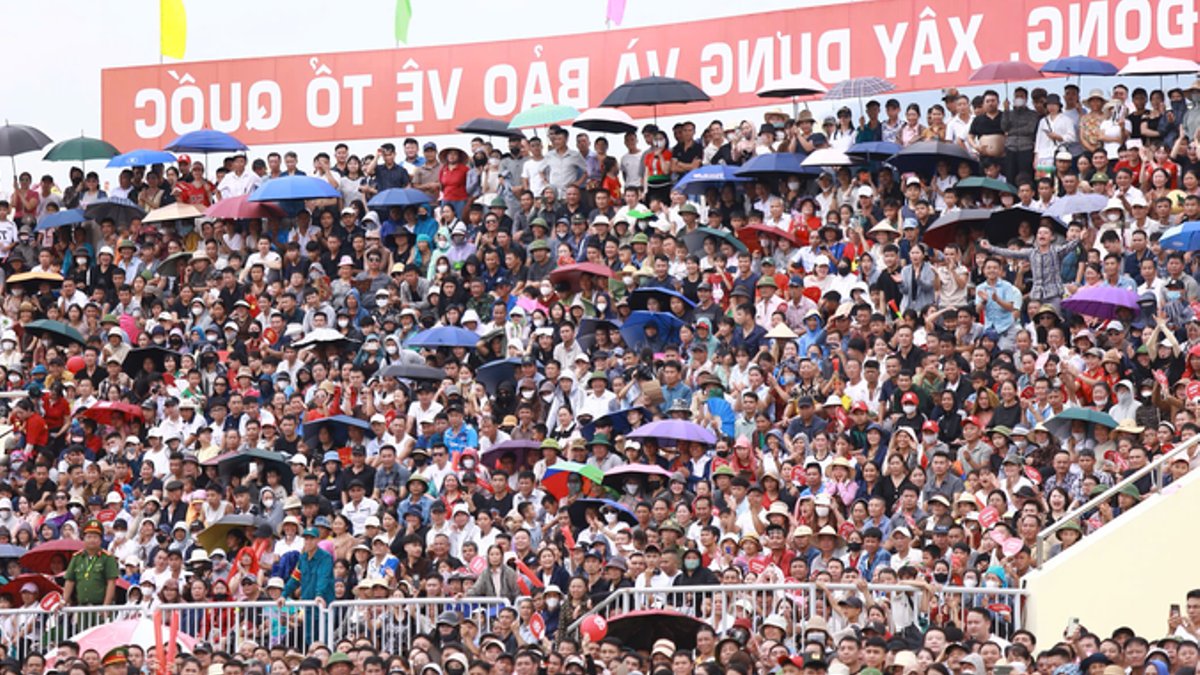
The inaugural 2026 Vietnam Ethnic Minority Women’s Football Tournament drew a record crowd of 15,000 spectators to the northern province of Lao Cai for the final match on August 29. The event, broadcast on national television, featured 12 teams from nine localities across the Central Highlands and northern mountainous regions. International media outlets, including the French newspaper Le Petit Journal, highlighted the tournament as a unique celebration of amateur athletes and ethnic minority cultures.
Fans call it more exciting than the Premier League
ASEAN Football reported an incredible atmosphere surrounded the final between the Dak Doa and Luc Yen teams. Viewers on social media Threads commented that the competition was “even more exciting to watch than the English Premier League.” The match featured players wearing traditional ethnic skirts, which became a focal point of the event’s visual identity.
These outfits were not mere costumes but practical designs inspired by local ethnic attire. They allowed players to sprint and strike the ball while retaining distinctive patterns and materials. The sight of women moving freely in traditional clothing challenged common assumptions about the limitations of such garments in competitive sports.
Mothers and daughters on the pitch
The tournament’s roster included mothers traveling with their daughters. Theo and Giang represented the Dak Doa team in the final. This was the first time the pair had traveled such a long distance together. For 16‑year‑old Giang, having her mother present was a significant experience. For Theo, the journey offered a chance to inspire her daughter.
Captain Thuon of the Dak Doa team described her life in the Central Highlands. She works as a truck driver transporting agricultural produce and tends to the fields. In Lao Cai, she stepped onto the pitch as a captain. Her journey represents the spirit of the tournament, where players are not professional athletes but community members united by a shared passion for the game.
Cultural fashion on the pitch
Every uniform was re‑engineered to balance cultural authenticity with athletic functionality. Designers kept the traditional weaving techniques and vivid color palettes that identify each ethnic group, while inserting stretchable panels that accommodated rapid direction changes. This careful blending of heritage and sport turned each sprint into a moving exhibition of regional identity, allowing spectators to appreciate the detailed textile work as much as the goals scored.
The visual impact extended beyond the field. Photographers captured close‑ups of the flowing skirts against the green backdrop, emphasizing how the garments complemented the players’ movements rather than hindering them. Commentators noted that each team’s attire acted as a living banner, announcing the presence of a distinct community to viewers nationwide.
Related: Tan Son Nhat Adds Exit Connecting Terminals
Media and national attention
National television coverage turned the grassroots event into a household conversation. The broadcast included interviews with players, coaches, and local officials, giving audiences insight into the daily lives that fuel their love for football. International interest grew after Le Petit Journal’s feature, which framed the tournament as a rare platform where amateur talent and cultural expression intersect on a televised stage.
Social platforms amplified the moment, with viral clips highlighting a goal scored while a player’s skirt swirled in mid‑air. The online buzz reinforced the tournament’s reputation as a fresh, compelling alternative to mainstream leagues, drawing viewers who might not normally follow women’s football.
Community impact and solidarity
The gathering of teams from diverse highland and mountainous villages created a palpable sense of unity. Players arrived with families, often accompanied by siblings or grandparents, turning the stadium into a temporary village fair where food stalls, traditional music, and dance performances accompanied the matches. This convergence illustrated how sport can serve as a conduit for cultural exchange, allowing each community to showcase its customs while sharing a common love for the game.
Even the refereeing crew reflected the tournament’s inclusive ethos. Officials wore attire that incorporated local motifs, reinforcing the message that every role on the field could honor heritage. Their presence showed the tournament’s broader goal: to demonstrate that football belongs to every segment of society, regardless of age, gender, or ethnic background.
The stories emerging from Lao Cai echo a larger narrative about empowerment. Women who typically balance agricultural labor, transportation work, and household responsibilities found a moment to step into the spotlight, wearing both a captain’s armband and the symbols of their ancestors. Their performances on the pitch offered tangible proof that passion and dedication can transcend conventional expectations.
By bringing together mothers, daughters, and multigenerational families, the tournament highlighted how football can bridge gaps that often separate rural communities from urban media exposure. The event’s success suggests a growing appetite for platforms that celebrate both athletic skill and cultural richness, paving the way for future editions that may expand the reach of Vietnam’s ethnic minority women athletes.