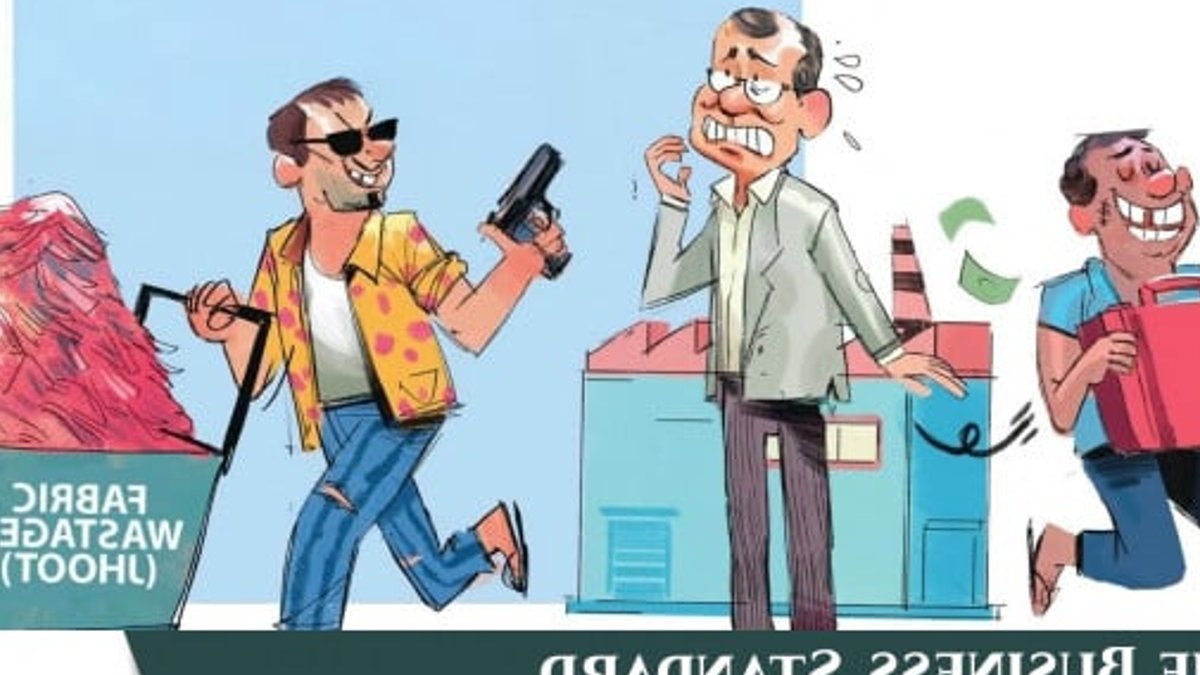
Extortion in Bangladesh’s textile sector has intensified since the recent change of government, with factory owners reporting forced sales, truck hijackings and threats against staff.
Industry leaders describe growing pressure
Showkat Aziz Russell, president of the Bangladesh Textile Mills Association (BTMA), said his paper and board mill in Rupganj, Narayanganj, is being targeted. “We cannot move trucks carrying our goods. They force us to sell materials worth Tk10 for Tk8 as part of a package deal,” he told TBS. Russell added that groups are pressure firms to recruit workers for mob activities, and that local influencers are backing the intimidation.
Formal complaints highlight criminal tactics
The Business Standard obtained two complaints filed in Bhaluka. On 11 July, Envoy Textiles’ deputy general manager, Sarowar Hossain, reported that a group hijacked a truck just outside the factory gate. The vehicle was recovered later that night after police were alerted. The complaint named former Mymensingh Swechchhasebak Dal organising secretary Ibrahim Khalil, party leader Sohag Mia and associates, alleging they threatened to block the removal of jhut and halted construction by blocking material deliveries.
Related: SIX Posts Record First Half Earnings
A separate filing by SQ Group’s country head, Warisul Abid, detailed a series of threats in early July. An anonymous letter threatened death for the company’s general manager, FM Niyaz Elahi Khan, and his family. Explosives were detonated outside the factory gate on the day a new vendor was scheduled to begin waste removal, and another threat was delivered to Khan’s residence on 5 July. It logged both a general diary and a first information report with Bhaluka police.
Transparency International Bangladesh’s executive director, Iftekharuzzaman, warned that the incidents clash with the BNP’s election promises of a business‑friendly climate. “If these practices are not stopped, they will prove self‑destructive and eventually spiral beyond control,” he said, urging the party to issue a clear message and the administration to pursue legal action.
Interviews with twelve industrialists revealed mixed experiences. Six said they were forced to sell waste to local power brokers; four reported similar arrangements without complaints; two said they faced no pressure, though all declined to be named for safety reasons.
Comparing this wave of coercion to earlier periods suggests a pattern: whenever a new political faction gains local dominance, the scramble for control over low‑value commodities like jhut often escalates.
Related: BitMart Enters US Prediction Markets
It turns ordinary business transactions into leverage points for patronage networks. The current climate appears more volatile than the post‑2008 era, when similar extortion was reported but largely confined to isolated districts.
While the government has pledged to improve security for industry, the persistence of truck blockades, death threats and explosive devices indicates that the enforcement gap remains wide.
The situation remains unresolved.