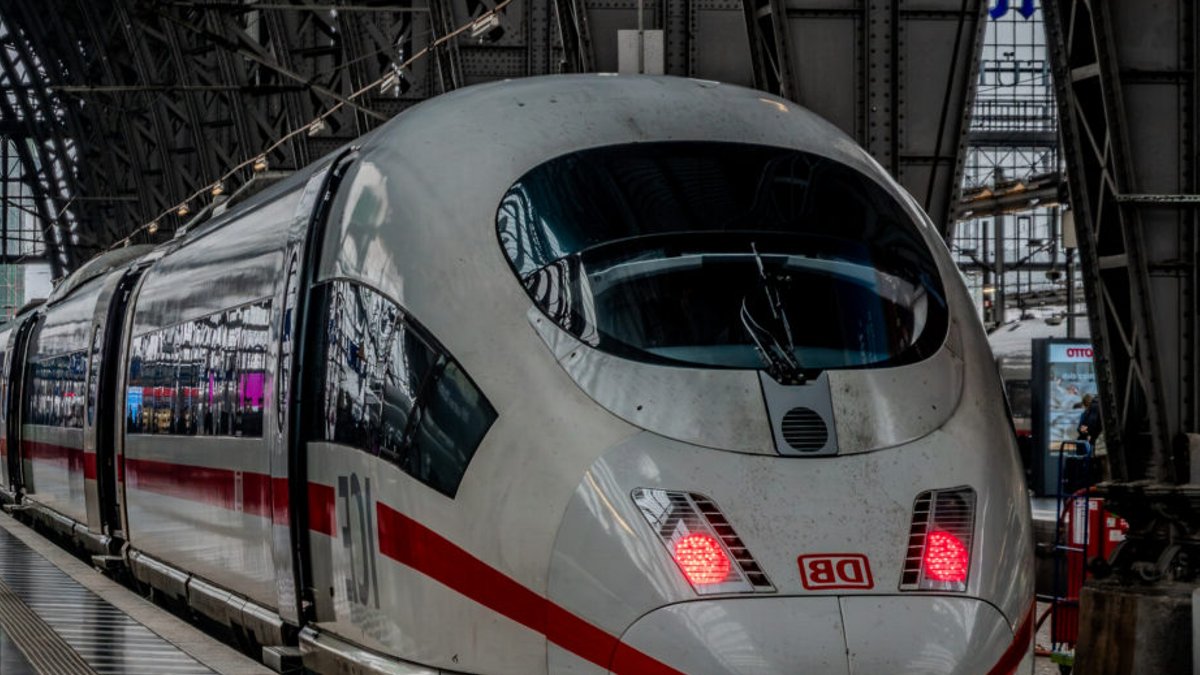
The European Union is pushing for higher prices on air travel to encourage passengers to choose trains over planes. This strategy works well between cities like Paris, Brussels, and Amsterdam, but it falls short in Eastern Europe, where the rail infrastructure lags behind.
Historically, travelers could journey from Paris to Athens by train, a route that disappeared in the 1970s. Today, no international passenger trains depart from Greece, and traveling from Athens to Berlin without flying involves a complex, multi-day journey through Thessaloniki, Sofia, Bucharest, and Budapest.
The EU’s Transport Policy and Its Challenges
The EU aims to make flying more expensive while investing in high-speed rail to provide an attractive alternative. However, this approach is more effective in the western core of the EU, where cities are closer together and high-speed rail networks already exist. In the east, many cross-border journeys lack comparable rail services, and the EU estimates that these connections won’t be available until 2035 or later.
Flying costs are already rising. Since January, airlines must purchase emission allowances for flights within Europe, and the European Commission has proposed extending this to flights outside the European Economic Area by 2029. Despite opposition from some countries, the Council and Parliament aim to agree on these measures by early next year.
While the EU promotes greener aviation, the reality for many in Eastern Europe differs sharply. For example, traveling from Warsaw to Tallinn by train requires an overnight stay in Vilnius, taking over 26 hours, compared to a 14- to 18-hour coach journey.
Related Post: HSBC to absorb Hang Seng’s investment unit
Eastern capitals are significantly farther apart than those in the west. For instance, Sofia is 1,070 km from Warsaw, and Athens is 1,800 km from Berlin. Even at a steady speed of 300 km/h, a direct train from Athens to Berlin would take six hours, excluding stops and changes.
In Northern Europe, challenges persist. The 396 km distance between Helsinki and Stockholm is typically covered by an overnight ferry. While passenger trains resumed between Finland and Sweden, a direct rail journey between the capitals still takes over a day.
The EU’s rail plan, published in November 2025, forecasts significant improvements by 2040, such as reducing the Warsaw–Vienna journey to four hours and 15 minutes. However, these are indicative estimates, and projects face delays.
For many in Eastern Europe, the practical alternative to flying remains a lengthy car or coach journey, often on roads that are not yet motorways.
The EU’s carbon pricing policy, while well-intentioned, does not account for the lack of viable alternatives in many regions. Passengers from Riga or Sofia face limited choices: pay higher airfares, endure long overland journeys, or avoid travel altogether.
Read Also: European films struggle to compete with Hollywood
Airlines quickly adapt to tax changes, often cutting routes in response. For example, Ryanair reduced 20 routes from its Belgian network after a tax increase.
The carbon price, currently around €90 per tonne, adds to the cost of flights. However, this comes on top of national ticket taxes and fuel mandates, further burdening passengers in regions with limited travel options.
While aviation contributes significantly to EU transport emissions, modern jets are more efficient than often perceived. Wizz Air reported 49.7 grams of CO2 per passenger-kilometer in 2026, compared to 106 grams for new petrol and diesel cars in 2024. Rail remains the lowest-emission option, but its impracticality in much of Eastern Europe leaves passengers with few choices.
The Role of Airlines and Infrastructure Development
High-speed rail development in Eastern Europe is progressing slowly. The first high-speed line, connecting Warsaw to Łódź, is not anticipated until the end of the project timeline.