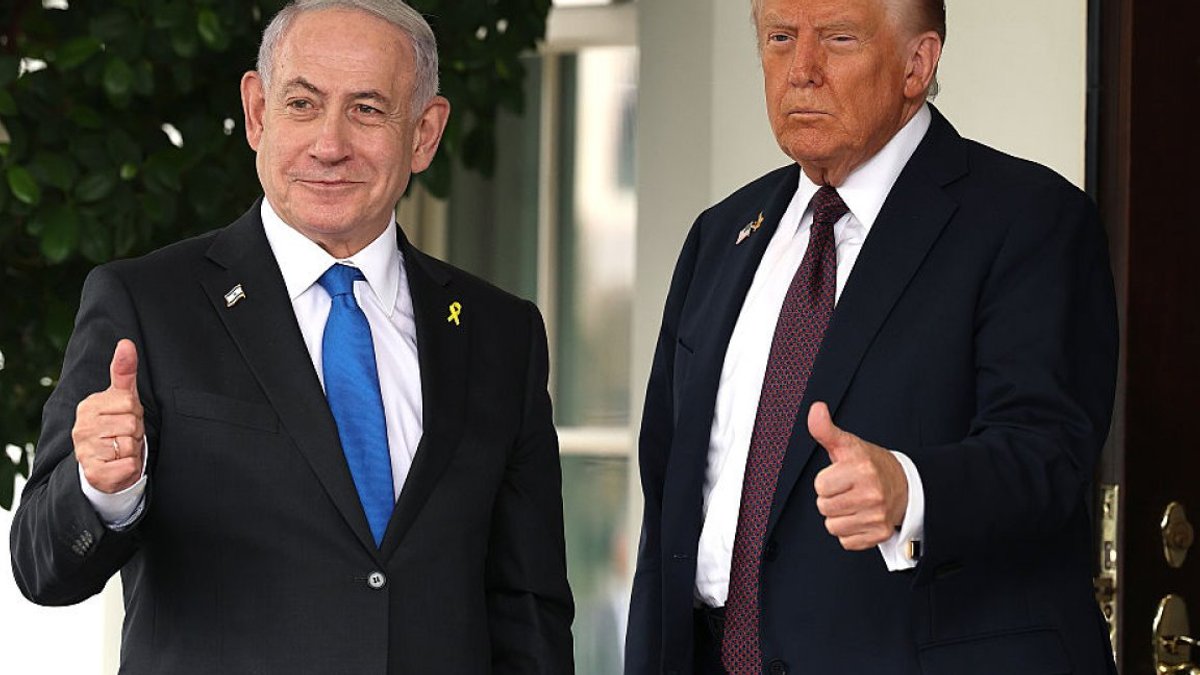
President Donald Trump endorsed Israeli Prime Minister Benjamin Netanyahu ahead of Israel’s October 27 legislative elections, calling him a “Great Warrior Prime Minister” and a “greater Partner for Peace in combatting the Islamic Republic of Iran.”
Trump’s Endorsement and Netanyahu’s Response
Trump’s endorsement, posted on Truth Social, warned that if Israel chooses a leader other than Netanyahu, the U.S. would have to take on that role alone, which he stated he was unwilling to do. Netanyahu responded with a video message thanking Trump and praising the U.S. He described America as fortunate to have a leader with “conviction, clarity, courage” who confronts the Iranian threat to both nations.
Criticism from Opposition Leader
Netanyahu’s main electoral rival, Gadi Eisenkot of the Yashar party, criticized Trump’s intervention. During a speech at Tel Aviv University, Eisenkot acknowledged his “appreciation” for Trump but emphasized that Israeli citizens alone should decide their prime minister. He also told Israel’s Channel 12 that he had requested no foreign interference in the election, highlighting concerns about external influence on domestic politics.
Election Polls and Geopolitical Tensions
Recent polls from Israeli media outlets including Maariv, Channel 12, Channel 13, and KAN News show Eisenkot’s Yashar party leading Netanyahu’s Likud party. However, neither of the two main coalitions, the current governing coalition nor the opposition, is projected to secure a majority of the 61 Knesset seats, with an average of the four surveys showing a near tie at approximately 51 seats each.
Both Trump and Netanyahu’s statements reinforced a hardline stance against Iran, with Trump claiming the country has been “systematically destroyed, both Militarily and Financially.” He warned that unless Iran changes its ways “rapidly,” they will “soon finish the job.” Netanyahu urged Americans concerned about gas prices to consider the consequences if Iran acquires nuclear weapons, vowing to “complete the mission” against Tehran with Trump’s support.
Oil Markets and International Reactions
This renewed rhetoric follows Iranian Foreign Minister Abbas Araghchi’s statement that Tehran’s proposal to reopen the Strait of Hormuz within seven days remains active, a gesture Trump has previously dismissed. The escalating tensions have not eased global oil markets, which remain volatile. Brent Crude, the international benchmark, reached approximately $110 per barrel, a six-month high, as the Iran conflict continues to drive fuel prices both globally and domestically.