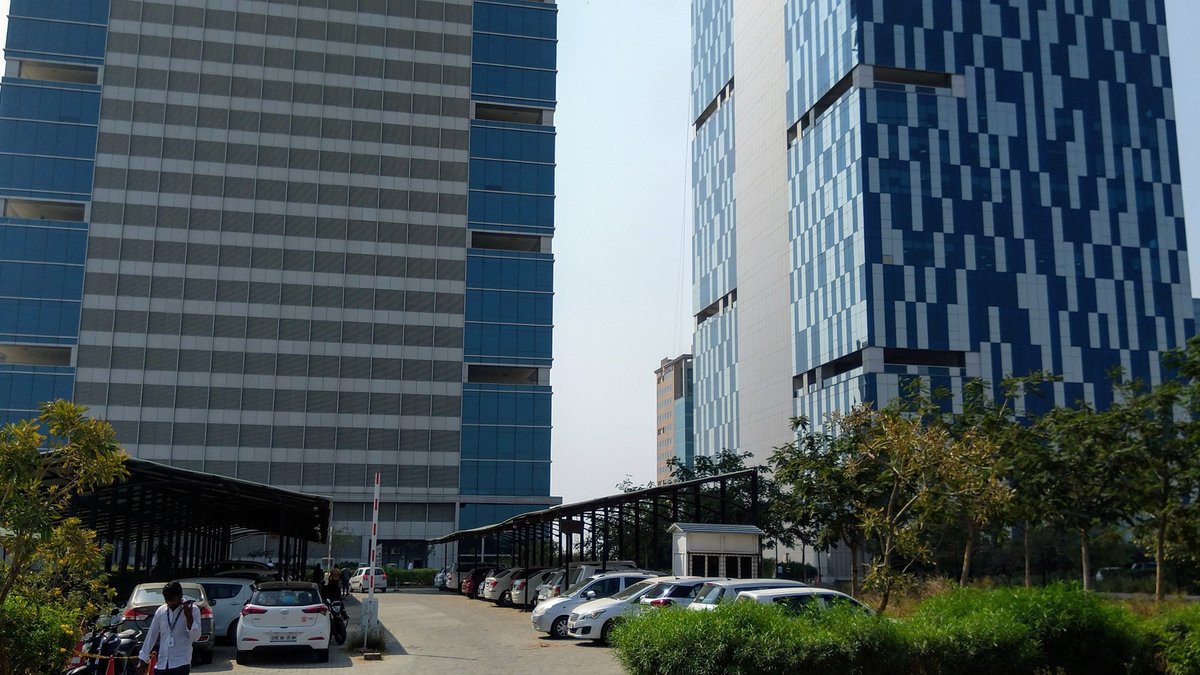
A visit to GIFT City in Gujarat last November revealed more than just the construction of towering skyscrapers. The emerging financial hub between Ahmedabad and Gandhinagar marks a deliberate shift in India’s approach to global capital—from passive recipient to active manager. Unlike traditional financial centers focused solely on housing banks or fund managers, GIFT City targets the broader infrastructure of capital movement: listings, treasury operations, and aircraft leasing that previously flowed to Singapore, Dubai, or Mauritius.
The transformation began with regulatory consolidation. In April 2020, India established the International Financial Services Centres Authority (IFSCA), replacing its fragmented oversight system with a unified rulebook for the zone. By March 2026, IFSCA had registered 1,147 entities, with banking assets exceeding $111 billion—a surge from just $14 billion in September 2020. Global institutions such as JP Morgan, Deutsche Bank, HSBC, Citi, and Standard Chartered now operate within its boundaries. While GIFT City has not yet surpassed Singapore or London in dominance, its rapid growth illustrates a fundamental principle: financial infrastructure can drive economic progress rather than merely follow it.
Europe’s fragmented capital markets hold back growth
Central and Eastern Europe confronts a contrasting challenge. The region’s manufacturing prowess, technology hubs, and shared-service centers are deeply embedded in European supply chains, yet its capital markets remain fragmented. Across Bulgaria, Croatia, Hungary, Poland, Romania, Slovakia, and Slovenia, equity market capitalization averages below 15% of GDP, against an EU average of about 68%. The national figures run from 1.5% in Slovakia to 30% in Croatia. The European Bank for Reconstruction and Development (EBRD) identifies the core issues: limited initial public offerings, thin liquidity, narrow investment instruments, and regulatory barriers enforced by eight separate national systems.
These structural weaknesses have tangible consequences. Family-owned businesses struggle to expand without foreign acquisition, households face limited opportunities to build wealth locally, and fund managers in New York perceive the region as eight disconnected markets rather than one unified investment destination. Despite its role as a manufacturing powerhouse, Central and Eastern Europe has yet to establish itself as a cohesive investment hub.
Related Post: EU’s rail push falters in Eastern Europe’s travel gap
Cross-border exchanges push toward a unified vision
Key steps toward integration are already underway. In November 2024, stock exchanges from Bratislava, Budapest, Bucharest, Sofia, Ljubljana, Warsaw, and Zagreb signed a memorandum with the EBRD. A month later, Skopje joined, becoming the sole non-EU exchange in the group. By August 2025, finance ministers from all eight countries endorsed the project in Zagreb, aligning political support with market ambitions. In March 2026, they submitted a joint position paper to Brussels advocating for a Savings and Investments Union, including proposals for a common regional index and coordinated reclassification in MSCI indices. That September, the EBRD initiated technical work to address regulatory fragmentation hindering market integration.
The central question remains whether this cooperation can create a truly investable region without requiring full consolidation, a single exchange, or a new financial capital. The approach must avoid traditional merger models in favor of coopetition: national competition combined with regional resource pooling. Three lessons from Gujarat provide a framework. First, scale matters. GIFT City succeeded by building an ecosystem rather than a single trading floor. Central and Eastern Europe needs a unified investment narrative supported by regional indices, joint investor roadshows, and easier access to companies listed across the network. National markets can retain their identities while collectively achieving a scale unattainable individually.
Three lessons from Gujarat’s financial ecosystem
Second, connectivity is critical. India created a specialized legal framework for GIFT City, but Central and Eastern Europe requires interoperability rather than exceptions. The Baltic states demonstrate what’s possible: three small markets sharing infrastructure and harmonized practices gained greater visibility together than separately. The region needs standardized access rules, reduced cross-border settlement costs, and compatible trading systems, not new legislation, but more efficient implementation of existing frameworks.
Within this emerging network, Warsaw and Bucharest play distinct yet complementary roles. Warsaw serves as the region’s heavyweight, boasting the deepest market, largest domestic economy, and the only exchange with FTSE Russell developed-market status since 2018. Bucharest, meanwhile, represents rapid growth, earning FTSE emerging-market status in 2020 and hosting the largest IPO in its history with Hidroelectrica in 2023. It lists energy sector leaders while expanding its private pension fund base and serves as a geographic bridge between the EU and the Black Sea. Together, they illustrate how markets at different stages can mutually reinforce each other.